The Show Must Go On for the Osmonds

Originally published on PBS Next Avenue by Sherri Snelling

They say lightning never strikes twice in the same place yet this is exactly what happened to Alan Osmond and his son David Osmond of the famous entertainment family.  This lightning came in two forms:  great musical and performing talent as well as a gift for songwriting but also something less glamorous:  a diagnosis of the autoimmune disease multiple sclerosis (MS).

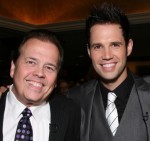
Alan and David Osmond

Alan and David Osmond

The Show Goes On for the Osmonds

Growing up Osmond means you know how to be at the pinnacle of the entertainment world – you sing, you dance and no matter what the show must go on.  This was no problem for David Osmond, one of eight sons born to Alan, the oldest of the famous Osmond Brothers who shot to fame along with Donny, Merrill, Wayne and Jay in the 1960s-70s (Marie and Jimmy came later).  As a torchbearer for the Osmond dynasty, David, age 32, has a successful solo career, still performs as the lead singer for the Osmonds – Second Generation, is hosting a new TV music competition reality series and participated in the eighth season of American Idol.

But, imagine if one day you woke up and found you could not walk, you could not hold a guitar, you could not sing because the pain in your chest and paralysis in your body reached from your toes to your diaphragm making it hard to breathe.  This was what David Osmond faced in 2005 when he was diagnosed with multiple sclerosis (MS) and went from a promising entertainment career into a wheelchair.  Remarkably, it was the same diagnosis his father, Alan, had been given almost 20 years earlier when he was in his late 30s.  What makes this story so inspiring is that for the Osmond family, whose longevity in show business is legendary, both Alan and David are not only living with MS today, they are actually thriving.

Multiple sclerosis, which affects 2.5 million people worldwide, is an autoimmune disease that attacks the central nervous system and for which there is no cure.  Essentially, scars and lesions cause interference with the transmission of signals to the brain and spinal cord that then cause the unpredictable and often debilitating symptoms that MS patients experience such as numbness, tingling and searing pain in the extremities, periods of partial or full blindness, loss of sensory function such as taste or smell and even full paralysis.

While researchers feel there may be genetic predictors for MS (the National Multiple Sclerosis Society states that siblings or children of those with MS have a 1 in 40 risk of also having MS), there is no clear connection that one generation passes it to another.  What Alan did pass to his son David is a “can do” rather than a “can’t do” attitude towards living with MS.

“When I originally received the diagnosis, I had tested positive for West Nile Virus but some of the symptoms did not match up so they tested for MS and found I had the relapsing/remitting form of this disease which my doctors believe may have been dormant in my system but was triggered by the virus,” says David.  “I was in complete denial – I had grown up watching my dad battle MS and my symptoms were not really the same so I just could not believe it.”

There are four variations on the aggressiveness and progression of MS disease, Alan’s was the primary progressive type, a diagnosis only 15 percent of all MS patients receive.  With primary progressive there are no flare-ups or periods of remission such as with David’s type of MS – which means for Alan it is supposed to be a slow degeneration of the body’s functions.

Originally, David’s devastation took on the typical reaction people have when faced with a difficult diagnosis:  “Why me?”  He relates how one day while in a wheelchair he watched his brother playing on the floor with his kids and wondered to himself, “Will I ever have that?”  You can hear the emotion in his voice as he continues, “I’m almost embarrassed to admit that is how I felt because when I looked from my brother and nieces and nephews to my dad and realized, here is this man who has lived with this disease for 20 years and he has never complained, I realized life can go on and you can find ways around this disease just like my dad did.”

“I have a motto I live by – you have to be TUFF,” says Alan.  “It stands for: Target what you need to do; Understand everything you can about the challenge in front of you; Focus on how to live with or beat that challenge; Fight, Fight, Fight – you have to have the drive and desire to keep living and keep fighting for yourself and those around you.”

Family and Faith

Osmond father and son tackled MS the same way they approach the music business – all out or as Alan says “I may have MS but MS does not have me.”

“I was given a cortisone shot when I was first diagnosed in 1987,” says Alan, “and it just about killed me.  It was right then that I decided there has to be a better way and I started investigating alternative medicine that would not have the side effects of traditional drugs.”

Both Osmonds have found ways to deal with MS and overcome many obstacles and the dire prognosis of their physicians.  David was able to get up and out of his wheelchair with powerful steroid shots that helped him walk down the aisle with his beautiful bride, Valerie, a few years ago.  “I proposed to her from my wheelchair and she said, ‘Yes!’ so being able to walk down the aisle with her was something I just knew I had to do.”  He has not been back in his wheelchair since and the couple now has two beautiful daughters, ages one and three.

Valerie and David Osmond

Father and son embrace all-natural homeopathic remedies and David takes up to 50 all-natural supplements a day while Alan adds a daily dose of 2,000-5,000 IUs of Vitamin D; they believe in using essential oils, such as Frankincense, for aromatherapy and they follow a healthy diet based on gluten-free (wheat-based products) and casein-free (milk protein) foods with limited meat and other proteins.  The strict adherence to an all-natural diet which Alan blends into most of his meals has helped manage his MS symptoms and helped him lose 30 pounds.  Alan also enjoys hydro-exercise – the buoyancy of the water not only takes the pressure off of sometimes painful joints but also helps with balance while practicing movements.  In addition, both Alan and David avoid stimulants such as cigarettes, coffee or caffeinated sodas, which is part of their Church of Latter Day Saints faith, and they believe in the power of prayer and positive thinking.  If there is an Osmond prescription for helping to tame the symptoms of MS it is simply “family and faith.”

In fact, both Alan and David credit their wives, Suzanne and Valerie respectively, with the kind of unconditional love so essential in a spouse when someone is facing a chronic illness.  According to the National Health Institute Survey conducted by the Centers for Disease Control, 75 percent of marriages among those couples dealing with a chronic illness end in divorce – 50 percent higher than the overall national divorce rate.

“There is a good side to every challenge in life,” says David.  “Sometimes dealing with something like multiple sclerosis can make your marriage better, I know both my wife and I have learned more patience with each other through this journey and I absolutely would not be where I am at today in conquering MS without her.”

Suzanne and Alan Osmond

Alan agrees that it was Suzanne who helped him seek the alternative remedies which have him defying all the odds with his prognosis.  All doctor predictions and prognosis pointed to Alan being in a wheelchair by now but instead Alan travels with Suzanne and is walking only occasionally using a leg brace or cart when he has to walk long distances.  Alan says, “It is not just one person who gets MS, it is the whole family.”  That is one of the reasons why Alan created his Web site, TheFamily, which addresses family issues around chronic illness and other life lessons.

Alan and David admit that they have learned a lot from each other through this journey with MS.  David says his dad has taught him to never feel sorry for himself, to embrace both the blessings and burdens in life with a positive attitude and to help as many people as you can with whatever you can.  Alan believes David has taught him what patience and perseverance are all about.

“I know it’s crazy to say, but it is actually a great time to have MS,” says David.  When his father was diagnosed more than 25 years ago, there were not a lot of options but today David, who sits on the board of the Nancy Davis Foundation for MS and attends her annual conferences for the foundation’s Center Without Walls says, “There are eight drugs on the market and several more being approved by the FDA as we speak.  The numerous choices we now have to attack this disease that is attacking our bodies – especially with the education about alternative, all-natural choices that I have made for my lifestyle – are encouraging.  I truly think we are going to lick this disease and the great research minds agree – they believe MS is one of the chronic illnesses that I may see a cure for in my lifetime.” (See more with David and other celebrities from the Nancy Davis Foundation for MS Race to Erase MS Event).

When I asked both Alan and David what are their private passions – both responded almost simultaneously with “spending time with family.”  While David enjoys sports like skiing even though his balance and agility are not what they used to be because of the MS, and Alan loves to continually learn new things and brainstorm on ideas – like teaching himself html code so he can build web sites – both men are happiest when surrounded by family.

As we wind up the interview, David is eager to get back to playing Legos and watching Disney movies with his two young daughters – a scene he was not sure he would have just a few years ago.  He says he wears a ring on his right hand that is engraved with ETTE – Endure To The End.  He says he has had the ring since before his MS diagnosis, so today he adds, “Endure to the end …of the day.”  With his girls calling for daddy from the other room, we say our “so longs” and I wish Alan happy birthday (June 22) and both men a happy Father’s Day.  I laugh as I later see a tweet from David – it says simply, “Going to make tshirts for my girls that say ‘Having MS gets on my dad’s nerves.’”

Book Cover SpotlightRead more of David and Alan Osmond’s story in Sherri Snelling’s book, A Cast of Caregivers,  which includes interviews with other celebrity caregivers as well as an A to Z guide on caregiving and how to balance self-care while caregiving. Click here to buy the book now.


Celebrity Spotlight

Caregiving Club CEO, Sherri Snelling, interviews celebrities from movies, TV, Broadway, sports, news and music who are or have been a family caregiver. This month we put the spotlight on two of the famous Osmonds – father and son living with MS – and their wives and families who care for them.

See the latest interview in the series below or click here to read all the interviews.

Alan and David Osmond – Life Father, Like Son – Living with MS

Originally published on Next Avenue by Sherri Snelling

They say lightning never strikes twice in the same place yet this is exactly what happened to Alan Osmond and his son David Osmond of the famous entertainment family.  This lightning came in two forms:  great musical and performing talent as well as a gift for songwriting but also something less glamorous:  a diagnosis of the autoimmune disease multiple sclerosis (MS).

The Show Goes On for the Osmonds

Growing up Osmond means you know how to be at the pinnacle of the entertainment world – you sing, you dance and no matter what the show must go on.  This was no problem for David Osmond, one of eight sons born to Alan, the oldest of the famous Osmond Brothers who shot to fame along with Donny, Merrill, Wayne and Jay in the 1960s-70s (Marie and Jimmy came later).  As a torchbearer for the Osmond dynasty, David, age 32, has a successful solo career, still performs as the lead singer for the Osmonds – Second Generation, is hosting a new TV music competition reality series and participated in the eighth season of American Idol.

But, imagine if one day you woke up and found you could not walk, you could not hold a guitar, you could not sing because the pain in your chest and paralysis in your body reached from your toes to your diaphragm making it hard to breathe.  This was what David Osmond faced in 2005 when he was diagnosed with multiple sclerosis (MS) and went from a promising entertainment career into a wheelchair.  Remarkably, it was the same diagnosis his father, Alan, had been given almost 20 years earlier when he was in his late 30s.  What makes this story so inspiring is that for the Osmond family, whose longevity in show business is legendary, both Alan and David are not only living with MS today, they are actually thriving.

Multiple sclerosis, which affects 2.5 million people worldwide, is an autoimmune disease that attacks the central nervous system and for which there is no cure.  Essentially, scars and lesions cause interference with the transmission of signals to the brain and spinal cord that then cause the unpredictable and often debilitating symptoms that MS patients experience such as numbness, tingling and searing pain in the extremities, periods of partial or full blindness, loss of sensory function such as taste or smell and even full paralysis.

While researchers feel there may be genetic predictors for MS (the National Multiple Sclerosis Society states that siblings or children of those with MS have a 1 in 40 risk of also having MS), there is no clear connection that one generation passes it to another.  What Alan did pass to his son David is a “can do” rather than a “can’t do” attitude towards living with MS.

“When I originally received the diagnosis, I had tested positive for West Nile Virus but some of the symptoms did not match up so they tested for MS and found I had the relapsing/remitting form of this disease which my doctors believe may have been dormant in my system but was triggered by the virus,” says David.  “I was in complete denial – I had grown up watching my dad battle MS and my symptoms were not really the same so I just could not believe it.”

There are four variations on the aggressiveness and progression of MS disease, Alan’s was the primary progressive type, a diagnosis only 15 percent of all MS patients receive.  With primary progressive there are no flare-ups or periods of remission such as with David’s type of MS – which means for Alan it is supposed to be a slow degeneration of the body’s functions.

Originally, David’s devastation took on the typical reaction people have when faced with a difficult diagnosis:  “Why me?”  He relates how one day while in a wheelchair he watched his brother playing on the floor with his kids and wondered to himself, “Will I ever have that?”  You can hear the emotion in his voice as he continues, “I’m almost embarrassed to admit that is how I felt because when I looked from my brother and nieces and nephews to my dad and realized, here is this man who has lived with this disease for 20 years and he has never complained, I realized life can go on and you can find ways around this disease just like my dad did.”

“I have a motto I live by – you have to be TUFF,” says Alan.  “It stands for: Target what you need to do; Understand everything you can about the challenge in front of you; Focus on how to live with or beat that challenge; Fight, Fight, Fight – you have to have the drive and desire to keep living and keep fighting for yourself and those around you.”

Family and Faith

Osmond father and son tackled MS the same way they approach the music business – all out or as Alan says “I may have MS but MS does not have me.”

“I was given a cortisone shot when I was first diagnosed in 1987,” says Alan, “and it just about killed me.  It was right then that I decided there has to be a better way and I started investigating alternative medicine that would not have the side effects of traditional drugs.”

Both Osmonds have found ways to deal with MS and overcome many obstacles and the dire prognosis of their physicians.  David was able to get up and out of his wheelchair with powerful steroid shots that helped him walk down the aisle with his beautiful bride, Valerie, a few years ago.  “I proposed to her from my wheelchair and she said, ‘Yes!’ so being able to walk down the aisle with her was something I just knew I had to do.”  He has not been back in his wheelchair since and the couple now has two beautiful daughters, ages one and three.

Valerie and David Osmond

Father and son embrace all-natural homeopathic remedies and David takes up to 50 all-natural supplements a day while Alan adds a daily dose of 2,000-5,000 IUs of Vitamin D; they believe in using essential oils, such as Frankincense, for aromatherapy and they follow a healthy diet based on gluten-free (wheat-based products) and casein-free (milk protein) foods with limited meat and other proteins.  The strict adherence to an all-natural diet which Alan blends into most of his meals has helped manage his MS symptoms and helped him lose 30 pounds.  Alan also enjoys hydro-exercise – the buoyancy of the water not only takes the pressure off of sometimes painful joints but also helps with balance while practicing movements.  In addition, both Alan and David avoid stimulants such as cigarettes, coffee or caffeinated sodas, which is part of their Church of Latter Day Saints faith, and they believe in the power of prayer and positive thinking.  If there is an Osmond prescription for helping to tame the symptoms of MS it is simply “family and faith.”

In fact, both Alan and David credit their wives, Suzanne and Valerie respectively, with the kind of unconditional love so essential in a spouse when someone is facing a chronic illness.  According to the National Health Institute Survey conducted by the Centers for Disease Control, 75 percent of marriages among those couples dealing with a chronic illness end in divorce – 50 percent higher than the overall national divorce rate.

“There is a good side to every challenge in life,” says David.  “Sometimes dealing with something like multiple sclerosis can make your marriage better, I know both my wife and I have learned more patience with each other through this journey and I absolutely would not be where I am at today in conquering MS without her.”

Suzanne and Alan Osmond

Alan agrees that it was Suzanne who helped him seek the alternative remedies which have him defying all the odds with his prognosis.  All doctor predictions and prognosis pointed to Alan being in a wheelchair by now but instead Alan travels with Suzanne and is walking only occasionally using a leg brace or cart when he has to walk long distances.  Alan says, “It is not just one person who gets MS, it is the whole family.”  That is one of the reasons why Alan created his Web site, TheFamily, which addresses family issues around chronic illness and other life lessons.

Alan and David admit that they have learned a lot from each other through this journey with MS.  David says his dad has taught him to never feel sorry for himself, to embrace both the blessings and burdens in life with a positive attitude and to help as many people as you can with whatever you can.  Alan believes David has taught him what patience and perseverance are all about.

“I know it’s crazy to say, but it is actually a great time to have MS,” says David.  When his father was diagnosed more than 25 years ago, there were not a lot of options but today David, who sits on the board of the Nancy Davis Foundation for MS and attends her annual conferences for the foundation’s Center Without Walls says, “There are eight drugs on the market and several more being approved by the FDA as we speak.  The numerous choices we now have to attack this disease that is attacking our bodies – especially with the education about alternative, all-natural choices that I have made for my lifestyle – are encouraging.  I truly think we are going to lick this disease and the great research minds agree – they believe MS is one of the chronic illnesses that I may see a cure for in my lifetime.” (See more with David and other celebrities from the Nancy Davis Foundation for MS Race to Erase MS Event).

When I asked both Alan and David what are their private passions – both responded almost simultaneously with “spending time with family.”  While David enjoys sports like skiing even though his balance and agility are not what they used to be because of the MS, and Alan loves to continually learn new things and brainstorm on ideas – like teaching himself html code so he can build web sites – both men are happiest when surrounded by family.

As we wind up the interview, David is eager to get back to playing Legos and watching Disney movies with his two young daughters – a scene he was not sure he would have just a few years ago.  He says he wears a ring on his right hand that is engraved with ETTE – Endure To The End.  He says he has had the ring since before his MS diagnosis, so today he adds, “Endure to the end …of the day.”  With his girls calling for daddy from the other room, we say our “so longs” and I wish Alan happy birthday (June 22) and both men a happy Father’s Day.  I laugh as I later see a tweet from David – it says simply, “Going to make tshirts for my girls that say ‘Having MS gets on my dad’s nerves.’”

Sherri Snelling is writing a book on celebrity caregivers, A Cast of Caregivers, and the lessons of love and caring that will be published by Balboa Press, a division of Hay House Publishers in January, 2013.

Nancy Davis Making Her Mess with Multiple Sclerosis Her Powerful Message

Nancy Davis

Sherri Snelling, talked with Nancy Davis, the formidable force behind the Nancy Davis Foundation for Multiple Sclerosis as she prepared for her 19th Annual Race to Erase Gala event held May 18.  Since May is National Multiple Sclerosis Awareness Month, Sherri profiles this fearless woman who has been living with MS since 1991 and has galvanized the Hollywood film, TV and music industries, Beverly Hills and New York society and the medical community to raise funds and awareness to find a cure faster for MS.

It started with a tingle in her fingers after she finished a day skiing on the slopes in Aspen.  A lifelong skier, she chalked it up to a little strain from tearing up the moguls all day.  After all, she was only 32 years old and a young mother – a little too soon to be contemplating the proverbial rocking chair.  When her other hand started tingling the very next day, then her whole hand went numb and then a few days after that her eyesight started to go, a future in a rocking chair was about all the hope doctors were giving her as they told her she had multiple sclerosis (MS).

That was 21 years ago.  Since then Nancy Davis, daughter of the late billionaire oil tycoon and former owner of 20th Century Fox Marvin Davis and wife Barbara, has used her enduring inner-strength, her family and personal connections and her incredible ability to bring people together for a common goal to find a cure for the multiple sclerosis (MS) that has been her constant companion for the last two decades.  In its 19th year, the Nancy Davis Foundation Race to Erase MS gala event, held annually at the Century Plaza Hotel among the glitterati in Beverly Hills, has raised more than $30 million to fund the Foundation’s Center Without Walls (CWW).

Connecting Those Who Can Create a Cure

Nancy’s brainchild, CWW provides the support that has permitted the medical community to link together multidisciplinary scientific programs and expertise across the country.  The Center’s network of the top six MS institutions that have established leading, innovative research programs include: UC San Francisco, Harvard, Yale, USC, Johns Hopkins, and Oregon Health Sciences University.  These six leaders are dedicated to understanding the cause of MS, advancing the development of new treatments and ultimately leading the race to find a cure for the autoimmune disease that currently attacks more than 400,000 people in the U.S. with 200 more people diagnosed every week.

What is so remarkable about Center Without Walls is that Nancy was able to literally tear down the bureaucracy that typically invades the research community where egos can sometimes outweigh outcomes.   Nancy told me, “It just didn’t make sense to me to have these wonderful research teams duplicating effort – if we want to find a cure faster, we have to work in cooperation and share information so that we get there in 10 years instead of 20.”  To that end she applauds the efforts of the six universities participating in CWW and says that it is the “vision, insight and flexibility of these extraordinary doctors” that will help end MS.

Some observers may believe that connecting the nation’s top researchers to lay down their competitive impulses and instead work together seems Herculean and near impossible. But impossibilities are not part of Nancy Davis’ vocabulary.  “My motto is take the impossible and make it possible,” says Nancy.

Lean On Me

Nancy with husband Ken & daughters

While Nancy’s form of MS is the most common, known as relapsing/remitting which means she will have episodes of numbness or paralysis in the extremities or problems with eyesight but then once the episode passes, she has periods of almost complete remission, the fatigue that is a common symptom of MS continues to challenge Nancy who is the consummate multi-tasker.  With three grown sons in their 20s and 30s, you would think this mom with a chronic illness was done with child-rearing.  But, seven years ago, she and second husband Ken Rickel had twin daughters which makes her roles as mother, author, jewelry designer, fund-raiser and non-profit foundation leader even more admirable.

“When I was diagnosed, there were no drugs on the market to help people with MS, now there are seven with three more being approved by the FDA,” says Nancy.  “Because of my family’s name and money, people told me to build a building, but we didn’t need a building we needed communication and solutions and we needed them fast and that is how my foundation and the Center Without Walls got started.”

As Nancy “dove into the disease” her desire to find a cure faster was all about her kids.  “I was a young mother at the time and because not much was known about MS then, all I could think about was that my freedom, my future and my ability to be a mom was going to stripped away from me – it was a very scary time,” she reveals.

She also told me that her diagnosis caused her first marriage to collapse.  “When you face a potentially devastating disease and possibly bleak future, you find out really quickly who will stand by you and who will run.”  The silver lining for Nancy was finding her second husband who she says gives her the ongoing “confidence and courage” to continue her fight for a cure and follow her other passions like her jewelry design.

Barbara Davis

Her mother Barbara, no slouch in the fund-raising ranks herself as the founder of the prestigious Carousel of Hope Ball to benefit the Barbara Davis Center for Juvenile Diabetes which for more than 30 years has been a to-die-for ticket among Los Angeles and New York VIPs, told me how proud she is of her daughter, “Nancy is tireless at working to find a cure for MS – not just for herself but also for all the people she has met who live with this unpredictable disease.”

Kathy Hilton, fashion designer, Beverly Hills society maven and mother of Paris and Nicky told me at the gala event, “We will have fun tonight – Nancy makes sure of that with the people she gathers, the music, the fashion show and the great silent and live auctions – but, come Monday, she will start working on next year’s event.  She never sits when there is work to be done.”  Kathy and her real estate tycoon husband Rick Hilton know full well the impact of MS having cared for Rick’s mom who died with MS a few years ago.

Kathy & Rick Hilton

While Nancy could tell stories about all the fabulous people she has met in her life (she lived three doors down from Elizabeth Taylor in Bel Air, her father played golf with then President Gerald Ford, her mom shoe shops with Nancy Reagan, she is godmother to Nicole Ritchie), she would rather rattle off the latest medical breakthroughs in therapies and medications to help those living with MS.  When I mentioned my closest friend suffers from MS, Nancy gently grilled me about what drugs she has tried, asking if she has thought about the alkaline diet, and does she know about this and that therapy.  It is refreshing to see a woman who could rest on her laurels of being a society princess, instead be more like Joan of Arc – a woman warrior in the fight against this chronic illness.

Her army is those famous friends who turned out for the Race to Erase event this year including music legend Stevie Wonder, American Idol winner David Cook, country and western star Clay Walker, actress Marg Helgenberger, whose father died from MS, Cybill Shepherd, LaToya Jackson, Khloe Kardashian and husband Lamar Odom and 1,000 other luminaries.  Right by Nancy’s side as co-host of the event was fashion designer Tommy Hilfiger who has been involved with the Foundation since 1997 and his brother Andy whose fashion line, Andrew Charles, was part of the evening’s show.  The Hilfiger brothers have a sister who has battled MS for over 25 years and are dedicated to the cause to find a cure.

Marg Helgenberger & Nancy

Nancy had the celebrities walk the orange carpet and when I asked her about the orange color, she said simply, “Orange is a happy color and you have to be positive when you are battling MS.”  She ends each year’s event by gathering those famous friends in a stirring rendition led by the musical giants in the classic Bill Withers song, “Lean on Me” which is also the title of her 1996 book, Lean on Me: 10 Powerful Steps to Moving Beyond Your Diagnosis and Taking Back Your Life

Nancy & Cybill Shepherd

Nancy & LaToya Jackson

“Nobody signs up for this illness,” says Nancy.  “A diagnosis of MS is not just about the person with the disease, it is about the family and you have to lean on each other to carry on.  It sounds crazy but MS has made me grateful because I appreciate my life and friends more.”

As the song’s refrain resonates from the Century Plaza Hotel’s ballroom, Nancy Davis certainly has friends she can lean on and those diagnosed with MS can lean on her knowing she won’t stop until a cure is found.

Click here to view the celebrity interviews from this event.

Sherri Snelling is writing a book on celebrity caregivers and the lessons of love and caring that will be published in January, 2013 by Balboa Press, an imprint of Hay House Publishers. 

You Can’t Keep a Good Woman Down, Even with MS – Meet My Best Friend

 Life is 10% what happens to you and 90% how you react to it.  – Charles Swindoll

Normally my blog features the latest caregiving information and interviews with top experts or professionals in various fields.   This week is different.  Today’s blog is very personal for me because it is about my best friend.  I have known her for 32 years and for 22 of those years she has been living with and conquering multiple sclerosis (MS).

I am dedicating this blog to my friend because May is National Multiple Sclerosis Awareness Month and also because today kicks off National Women’s Health Week (May 8-15) and she has a story to tell.

Vicki and Sherri

Soul Sisters

I first met Vicki Guttridge in high school but we really bonded in college as USC sorority sisters.  As we were living it up in our carefree, career-fueled 20s, my fun-loving, energetic friend was diagnosed at age 29 with Relapsing/Remitting MS – the most common of the four types of multiple sclerosis.  This means she has periodic flare-ups of the disease which can rob her of her eyesight, her ability to walk and leave her overwhelmingly fatigued.  She is not a hypochondriac – in fact quite the opposite – she is the energetic, spontaneous and joyous friend everyone wishes for in life.  She is my big sister teaching me many things about life and no better lesson than the grace with which she lives with her MS.  In fact, our circle of friends say, “you would never know Vicki was living with a chronic illness – she doesn’t dwell on it and she doesn’t let it hold her back.”

After two decades living with MS not only is she surviving, she is thriving.

When I think of Vicki two things come to mind:  courage and laughter.  It is these two things which have helped her with her diagnosis.  While she has tried many therapies over the years to address the progression and aggression of this degenerative disease – including acupuncture, Botox for bladder problems, special diets and experimental drugs – her latest approach is to look at her life and apply a new style.  She has undergone  a complete makeover in her exercise routine and her diet.  This is not easily done for someone who is a great cook and truly enjoys martinis on Friday night and watching Mad Men re-runs on her big screen.

When it comes to humor, she has a great attitude on her disease.   She laughingly told me that she recently had a tense meeting which she felt may be a hostile setting.  In true Vicki style she said, “I brought the cane and I worked it – after all, they can’t attack a person with MS, right?”

Vicki and her family

What keeps Vicki motivated is her family.  She has a daughter who is a freshman at Washington University in St. Louis and a son who is a high school junior being recruited in football by colleges as far afield as Princeton (Vicki and her family live in California).  She wants to stand and applaud at their graduations and dance at their weddings.  A new plan of attack was needed and she dove right in – literally.


Taming MS With the Help of a Special Trainer

The guru behind Vicki’s transformational plan is a certified health and fitness specialist located in Woodland Hills named Michael Brazeal.  As former head of the fitness program at the California Health and Longevity Institute and now owner of his own personal training service, Brazeal Fitness, Michael is no ordinary trainer.  With a master’s degree in exercise science (as opposed to the six-week course many trainers take), and a dedication to using evidence-based research, I was impressed as he explained to me the customized plan he developed for Vicki.

It starts with a health history intake – to explore not just her physical and neurological challenges but also her lifestyle challenges.  This helps Michael develop a plan to address Vicki’s physical and emotional hurdles.  Vicki calls him her biggest cheerleader.  Michael feels Vicki’s success to date – she has been on the new regime since January — is due to her behavioral change.

Michael training Vicki

Part of his strategy is to use the Japanese philosophy of kaizen – the idea of continuous quality improvement which is applied holistically to one’s life.  He also applies his own philosophy of “dosing appropriately.”  Michael reinforces to Vicki that it is not about the destination – it is about the journey.      Michael told me that good trainers are not unlike good physicians – they treat the person not just the body.  He understands Vicki – what is going on with her body but also her mind.  This means he can adapt her regime to what is happening in her life and not just with her disease.

For instance, one of their goals is to avoid the relapse in commitment that Vicki has experienced in the past when she started a new fitness routine.  After she recently lost 15 pounds, Michael had her carry weights of that measurement around as long as she could during the day – up and down stairs, getting into the car, etc.  This was to show her how she had alleviated her body of that unnecessary baggage putting less strain on her heart and joints.  This type of technique serves as a strong memory for her to not put that weight back on.

For exercise, Michael has Vicki doing exercise in a pool.  This helps with managing the heat sensitivity that so many MS patients suffer from, but also gives her the buoyancy of the water that helps Vicki with her balance – another MS challenge.  He also has her walking – using hiking poles for balance, riding a stationary bike and doing a lot of resistance training with kettle bells and bands.

Vicki has noticed that her balance is better and her core strength improved which also helps with her range of motion.  She told me she can reach for things on the top kitchen shelves without worrying about being wobbly on her feet.  Risk of falls is a huge concern for MS patients and Vicki feels she has overcome this fear to the point where she rarely needs her cane.  She also feels more energetic and says, “I don’t dread working out anymore.”

Knowledge is Power

Vicki truly believes that everything she has learned about MS, and continues to learn, has made her a better person.  Nutritionally, she keeps notes in a smartphone app called My Net Diary.   She tracks everything she eats and then discusses her choices with Michael.   She has lost 20 pounds so far with Michael’s guidance, but she decided to try a new alkaline diet with an expert nutritionist.  This type of diet is proven to improve many issues for MS patients.  In general, the alkaline diet involves eating certain fresh citrus and other low-sugar fruits, vegetables, tubers, nuts, and legumes.  It also recommends avoiding grains, dairy, meat, sugar, alcohol, caffeine, and fungi.  Proponents believe that such a diet maintains the balance of the slight alkalinity of blood without stressing the body’s acid-base homeostasis

She acknowledges her faith keeps her strong, her family keeps her going and her friends keep her feeling “normal” and in good spirits.  She also realizes living with MS is like life – it is a marathon not a sprint.

What touched me the most was a story Vicki recently told me.  Her son organized his football team to walk in the local National MS Society “Walk MS” event.  Her husband of 26 years, Tim, became emotional after the Walk.  Vicki asked him if it was because she could not join him in the walk and struggles sometimes to be able to physically do all the things she could do when he married her.  “That’s not it,” he replied.  “I was thinking about all the things you are capable of doing.”

For Vicki and Tim, the marriage vow, in sickness and in health, are not just words.

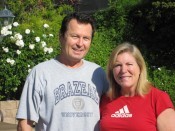
Michael and Vicki

Michael Brazeal’s Tips for MS Patients

  1. Find a trainer you are compatible with – as with any relationship, this is essential for success.
  2. Find a trainer who is credentialed in health, exercise science or similar field (preferably a master’s degree or higher) ensuring they understand your disease and how to treat you holistically.
  3. Review your Tool Box consistently – this is a set of tips and techniques a good trainer gives you.
  4. Keep a Me File – your health history including all medications, exercises, therapies, doctor appointments, etc.  (I like Microsoft Health Vault which you can find online for free).
  5. For MS patients – working out in the morning is best for heat issues – your body’s circadian rhythms which affect your body temperature are at their lowest levels in the morning.

Vicki’s Tips

  1. Track what you eat and what you do to exercise.  Vicki likes My Net Diary.  I also like these apps:  Weight Watchers, Lose It, Good Food Near You (great for travelers), Nutrition Tips.
  2. Don’t withdraw.  Don’t hide your disease.  Stay in the game.  Vicki has participated in clinics and graduate student programs at USC which address chronic illness issues.  Not only does she learn more about her disease but she makes new friends.  And, she does not avoid what she loves like USC football games.
  3. Get a massage – Vicki likes the chain, Massage Envy.  It heals body and mind.
  4. If you have to use a cane – go stylish or don’t go!  I like the Omhu Canes, Scandinavian-designed walking sticks with style that come in colors like turquoise, tangerine and royal purple.

Marg Helgenberger – Collecting Clues on Caregiving

May marks National Multiple Sclerosis Awareness Month and at the May 18 Nancy Davis Foundation annual Race to Erase MS Gala Event, Emmy Award-winning actress Marg Helgenberger will serve as a celebrity champion and award presenter to actress Teri Garr who lives with MS. 

Sherri Snelling spoke to Marg about her recent exit after 12 years as star of TV’s drama series, CSI, and how she is stepping into the spotlight as a champion for those living with MS, a disease which claimed her father’s life almost 25 years ago when Marg was just starting her acting career. 

Marg Helgenberger sounds as strong and in charge as she did playing Catherine Willows, the independent single mom and forensic crime scene analyst on CBS-TV’s top-rated drama series, CSI.  However, as we talk about her recent work to bring awareness and support to those suffering from multiple sclerosis (MS) and how this disease impacted her dad and her whole family, the vulnerability of youth and past painful memories resonates in the voice of this ageless actress.

In the 1980s, Marg was still a college co-ed at Northwestern University with a future full of promise when she got the call that her father had a devastating chronic illness.  Marg thinks back about that day and the five years that her father struggled with MS.

“My dad was a young man when he was diagnosed with MS – he was so full of life and to see this disease overpower him in such a short time was really sad and devastating,” says Marg.

Marg grew up in America’s heartland, a small Nebraska town where fields, farms, family and friends abounded.  Her close knit clan included an older sister, her younger brother and her parents.  Her mom was a nurse and her dad, Hugh, owned a butcher shop.  At first, her father originally attributed the tingling and numbness in his arm to his physically intensive job lugging sides of beef around and constantly chopping and cutting – he thought he just had a pinched nerve.  However, as the symptoms progressed and persisted, he was eventually given the diagnosis of multiple sclerosis (MS) – and the prognosis could not have been worse as it was an extremely rare and progressive type of MS.

Multiple sclerosis is one of the numerous chronic illnesses for which there is still no cure, although according to the Nancy Davis Foundation recent research is encouraging.  Today, more than 400,000 people in the U.S. and 2.5 million people worldwide live with this insidious disease that attacks the central nervous system.  Essentially, the myelin, which is the protective covering for the nerve fibers in the central nervous system, become inflamed or damaged and through this inflammation the myelin becomes scarred, thus forming sclerotic patches.   These multiple scars or lesions cause interference with the transmission of signals to the brain and spinal cord that then cause the unpredictable and often debilitating symptoms that MS patients experience such as numbness or tingling in the extremities to periods of blindness and even full paralysis.

Twice as many women as men are diagnosed with MS, and it is typically uncovered when patients are 20-50 years old.  While researchers feel there may be genetic predictors for MS, there is no clear connection that one generation passes it to another.  In fact, research has not shown any significant findings on how and why certain people are afflicted with MS.  What they do know is that no two people experience MS in the same way – some patients may experience some or most of the symptoms and may have periods of full recovery.  However, because the disease is not curable, it is a progressive and degenerative disease of varying degrees.

Most patients fall into one of four categories:  1)  Relapsing/Remitting (the most common with 85 percent of MS patients in this category where you have flare-ups with periods of remission); 2)  Primary/Progressive (continuous worsening of the disease with no flare-ups or remissions); 3)  Secondary/Progressive (begins as relapsing/remitting but if untreated becomes primary/progressive); and 4)  Progressive/Relapsing (the most rare with continuous decline and increasingly intense flare-ups).

Marg’s father had Progressive/Relapsing MS and was diagnosed when he was only 45 years old.

It Takes A Village

Marg with her mom & dad at her college graduation

Marg remembers this time as very challenging for her family.   Her mom had just recently been diagnosed with breast cancer and underwent a double mastectomy when Marg was a junior in college.  Now just a year later, the family was hit by the news of her dad’s disease.  In the 1980s they did not have the therapies and medications for MS that they do today.  Marg remembers going with her mom and dad to the hospital where he would get corticosteroid shots that would leave him relieved from some of the pain but bloated, unable to sleep and miserable.

It was during this period that Marg decided she wanted to pursue an acting career and the Big Apple was where she had to be.  However, she says she felt guilty over not staying in Nebraska to help her mom care for her dad.  So often, family members in Marg’s position give up their dreams.  But, Marg’s parents were supportive of their daughter and encouraged the pursuit of her acting passion in New York.

As Marg’s career took off, she landed a key role on the TV soap opera, Ryan’s Hope, and began appearing on popular primetime TV shows like Spencer for Hire and China Beach.   Meanwhile her dad’s symptoms continued to worsen.  Originally he was able to get around with a cane but he quickly became wheelchair-bound and could no longer work.  Since her mom had to continue her job as a nurse to make ends meet, her father was often home alone.  One day his wheelchair got jammed as he tried to get around a hallway corner and he was stuck there for hours.  That is when the family hired a professional health care worker to provide home care for Marg’s dad while her mom was at work.  With money tight, Marg, her mother and her brother formed a caregiving tag team with her mom and brother performing the physical care and Marg providing a lot of the financial resources.  Marg also tried to get home as many weekends as her job would allow.

It was during this period that Marg said she really appreciated her small town, rural America upbringing.  The head of the local Jaycees (also known as the United States Junior Chamber), a civic organization for leadership training for those ages 18-41, contacted Marg and said they wanted to hold a fundraiser to buy a wheelchair-equipped van for her dad and family.  They were able to raise enough funds that Marg could match the amount they raised and they could purchase the vehicle.

“It really struck me as so sweet and that there is such a power of community when someone is in need,” says Marg.

It was this experience that planted the seed of inspiration in Marg to become a champion to help others.  While her acting career continued to soar with roles in TV (Perfect Murder, Perfect Town, The Tommyknockers) and films (Erin Brockovich, Mr. Brooks), she also became a passionate advocate for breast cancer awareness and fundraising, hosting an annual golf tournament in her home state to fund breast cancer treatments and research at the local Omaha hospital.

She told me that “not a day goes by that I don’t think about my dad,” and now her advocacy is bringing more awareness to finding a cure for MS.

“While I am so proud of the progress made in breast cancer treatments and the small role I could play in helping people, multiple sclerosis just doesn’t get the kind of attention as other diseases so I want to shine a spotlight on this disease which is so devastating for families,” says Marg.

She will be in the spotlight in support of MS awareness on May 18 and I know whatever role Marg takes on – actress, advocate, caregiver – this star will continue to shine at whatever she chooses.

Watch Marg’s interview from the Race to Erase Event

This blog is adapted from Sherri Snelling’s book, A Cast of Caregivers – Celebrity Stories to Help You Prepare to Care. To read more of Sherri’s interview with Marg, click here to buy the book now.