Heroes on the Homefront – the Caregivers of Veterans

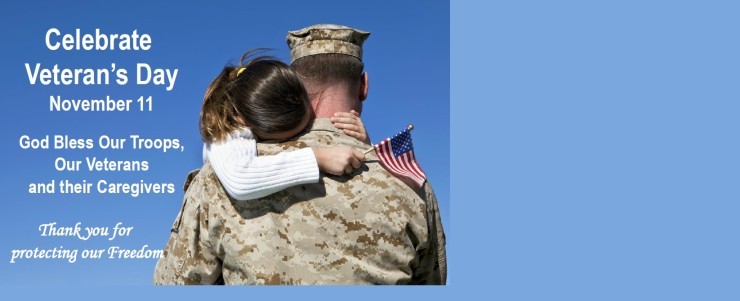
Today is Veterans Day when we honor those who have served our country at home and abroad to ensure our freedom.  But it is not just our service men and women who make the sacrifices for freedom.  I would also like to honor the 10 million family caregivers of our nation’s veterans and the 7 million caregivers who are veterans themselves.

In a landmark study from the National Alliance for Caregiving and underwritten by UnitedHealth Foundation, it showed:


  • Veterans’ caregivers bear a higher burden than most, helping to manage emotional and physical conditions often for 10 years or longer.  In fact, compared to caregivers nationally, caregivers of veterans are twice as likely to be in their caregiving role for more than 10 years (30 percent vs. 15 percent).
  • Caregivers of veterans are overwhelmingly women (96 percent) who sacrifice their own health, work and family life.  These veteran’s caregivers have twice the levels of stress (88 percent) or depression (63 percent) than typical caregivers.
  • The study revealed many veterans’ caregivers are younger – spouses of those having served in Operation Iraqi Freedom (OIF)/Operation Enduring Freedom (OEF) but also revealed more baby boomer parents are caring for their injured adult children.  Many of these veterans are suffering with the following:  60 percent have post-traumatic stress disorder (PTSD), 70 percent with mental health conditions such as depression or anxiety, and 29 percent with traumatic brain injury (TBI).

I recently had the privilege of speaking to two caregivers of veterans whose stories highlight the sacrifice and service which is the true hallmark of our military families.

From Newlywed to Nurse

Libby met her husband, Jim, in an online dating site for boomer and seniors.  She was in her late 50s and was thrilled to find the love of her life in this enigmatic, heroic man who was a Vietnam War veteran.  Their whirlwind romance led to marriage but Libby’s dreams of riding off into the sunset together were about to take a detour.  In Libby’s words, “Within 14 months I went from newlywed to nurse.”

Jim felt he had long suffered the consequences of the Agent Orange he had come into contact with in South Vietnam.  Recently, he had a complicated hernia operation and in addition to his rapid weight loss, he was eventually diagnosed with prostate cancer.  Linda began her long journey of caring for her ailing husband.

As days turned into weeks turned into months, Libby realized she was neglecting her own health and her emotional state was fragile.  She had stopped going to her gym class, stopped having lunch with girlfriends and ultimately she had to leave her job as head of a major company’s customer service department because Jim needed constant care.

Proud Parents Face a Retirement of Caregiving

Rosie and her husband Alain had both recently retired and were busy planning how they would be spending their golden years.  They had it all mapped out – a road trip in an RV Alain had his heart set on and participating in tandem bike races around the country.  Then the call came that would change everything.

Their 25-year-old son Alan Jr., known to family and friends as “Doc” was serving in Iraq. They received a call advising them their son had been shot in the abdomen while helping to keep a supply road open between Baghdad and Kuwait.  They were told he lay bleeding, slipping in and out of consciousness on the open battlefield for more than three hours before they finally extracted him, got him stabilized and put on a Medivac to Germany. Eventually he was transported to Walter Reed Army Medical Center in Bethesda, Maryland.  When Rosie and Alain arrived at the hospital, their son had survived more than 30 surgeries but had suffered a stroke which left him with traumatic brain injury (TBI).  The doctors informed Rosie and Alain Doc would never regain his ability to walk, dress himself, bathe himself, have the ability to talk clearly, or be in any way independent.

After Rosie and Alain brought Doc home they needed to create a new normal.  The den in their family home was transformed into Doc’s room equipped with a special patient lift to easily get Doc from bed to wheelchair or the bath.  Every day, Rosie lovingly bathes her 25-year-old son – as she once did when he was only 25 months old. Rosie teared up when Doc proudly showed me his Purple Heart.  Whatever hopes and dreams she had for her son’s future are now captured in the pride she has in her son and his service to his country.

Epilogues of Inspiration

Libby told me she pulled herself out of the downward spiral of depression so common for caregivers. She found solace two ways:  by creating an online newsletter which has now become a Lotsa Helping Hands community to update family and friends about Jim’s progress in beating his cancer and in her progress in getting her life back.  She also took a terrific caregiver self-care education training course through the local VA office called Powerful Tools for Caregivers.

You might think Rosie and Alain’s plans for their retirement were destroyed but in reality they were just delayed.  “I decided we were going to go from the bedside to outside,” Rosie tells me.  This active, athletic family, including Doc, participates in events around the country at least once a month including the Disabled Sports USA activities which include adaptive surfing, river rafting, snorkeling and rock climbing.  They also attend the Challenge Aspen annual adaptive skiing event in Snowmass, Colorado.

Rosie started Help Our Wounded, a nonprofit organization that provides support and direct assistance for veteran’s families in need. The volunteer help are mentors who know how to navigate the VA and military benefits system – those caregivers who have been through the experience of caring for a veteran. In addition, she and Doc star in a public service announcement for the Wounded Warrior Project to show other veterans and their caregivers there can be hope and healing.

God bless our troops, our veterans and their family caregivers.  And, on this Veterans Day (and every day) – my thanks for your service, your courage, your sacrifices and your caring.

Note:  This week’s blog is dedicated to the veterans in my life – my step-father who is a Korean War Veteran and proud Navy man, my late grandfather who was an Army WWII veteran and my brother’s good friend, Major Tai Le, who was assigned to the Pentagon in the JAG office after his second tour in Iraq but who is back in Iraq on his third tour of duty. 

Enlist Now to Help Veterans and Their Caregivers

They serve and they sacrifice – all for our freedom.  This Memorial Day, we remember those brave men and women who have lost their lives in conflicts and wars to guarantee our American way of life.  But, I will also be thinking about the 23 million living veterans of wars ranging from WWII to Operation Enduring Freedom and their 10 million family caregivers.  According to the Department of Veterans Affairs, amazingly, seven million of these 10 million caregivers of veterans are veterans themselves. They deserve our thanks – and not just in lip service but in real service.

While we join our families and friends for the kick-off to the summer season this weekend – the BBQs, the pool parties, the store sales and blockbuster movies – I ask you to take time to talk to your family and friends about “enlisting” to help our veterans and their caregivers.  From Memorial Day until Veterans Day (November 11, 2012) – check out my 8 tips on how to support our veterans and their family caregivers.

To encourage your volunteerism, here are a few things you should know about these “bravehearts” – the caregivers of our veterans from a landmark study conducted by the National Alliance for Caregiving and underwritten by UnitedHealth Foundation:

  • Veterans’ caregivers bear a higher burden than most caregivers, helping to manage emotional and physical conditions often for 10 years or longer.  In fact, compared to caregivers nationally, caregivers of veterans are twice as likely to be in their caregiving role for more than 10 years (30 percent vs. 15 percent).
  • Caregivers of veterans are overwhelmingly women (96 percent) who sacrifice their own health, work and family life.  These veteran’s caregivers have twice the levels of stress (88 percent) or depression (63 percent) than typical caregivers.
  • The study revealed that many veterans’ caregivers are younger – spouses of those having served in Operation Iraqi Freedom (OIF) or Operation Enduring Freedom (OEF) but also revealed that Baby Boomer parents are caring for their physically and emotionally injured adult children.  Sixty percent of these veterans are suffering with post-traumatic stress disorder (PTSD), 70 percent with mental health conditions such as depression or anxiety, and 29 percent with traumatic brain injury (TBI).

Enlist Now – 8 Ways To Help Caregivers of Veterans This Year

1. United States Department of Veterans Affairs (VA) – There are several opportunities to volunteer to support veterans and their caregivers through the federal government department dedicated to them.  In addition to donating time and money, there are organized Welcome Home Events happening at the local VA Medical Centers across the country, there is also President Obama’s United We Serve activities happening all summer long which include helping homeless veterans, becoming a volunteer driver to provide transportation to veterans and families to and from VA facilities and more.

2. Wounded Warrior Project (WWP) – dedicated to those who were injured since 9/11, WWP has an online community for its members to share stories and volunteer to help one another at My Care Crew.  If you know a caregiver of a wounded veteran you can start one of the free, private communities where volunteers can provide help and support or find an existing community and ask to join.

In addition, WWP has hosted numerous Caregiver Retreats where caregivers get a weekend away to relax, recharge and reconnect with other caregivers going through similar challenges, and they support a host of career training and employment opportunities for veterans and their spouses. Nominate a caregiver of a veteran or donate to support this wonderful respite break for a veteran’s caregiver.

WWP also has the Believe in Heroes™ campaign, a two-month long series of events from September 11 and November 11 where all Americans can show their support of veterans by hosting a Believe in Heroes party or supporting retailers and brands that support heroes or purchasing Believe in Heroes gear and apparel.

3. ReMIND – Stand Up for Heroes is the annual event held in November and coordinated by the Bob Woodruff Foundation to provide resources and support to injured service members, veterans and their families.  Donate to the cause or buy tickets to the event through the ReMIND Web site.

4. Joining Forces – this is an initiative to encourage institutions, businesses and individuals to do more to help military families that is championed by First Lady Michelle Obama and Jill Biden, wife of the Vice President. There are numerous ways to get involved including:

  • The YMCA, National Military Family Association and Sierra Club Foundation offered free summer camp to 7,000 military kids at camps in 35 states.
  • Wal-Mart and Sam’s Club will guarantee a job at a nearby store for military family members who have been transferred to another part of the country.
  • The U.S. Chamber of Commerce will hold 100 hiring fairs around the country to help 50,000 veterans and military spouses find jobs outside government.

5. National Military Family AssociationOperation Purple Healing Adventures is a family camp experience for Operation Iraqi Freedom (OIF) and Operation Enduring Freedom (OEF) military families that has given hope and healing to more than 45,000 military children and teens since 2004.  You can become a camp counselor or donate funds for camp activities.

6. Project Sanctuary – this non-profit organization has a mission to provide therapeutic, curative, supportive and recreational activities to veterans, active military personnel, their spouses and children in a leisure environment and has been recognized by Joining Forces as one of the top 5 veterans and families non-profit organizations.

7. Fisher House – The Fisher House™ Foundation donates comfort homes, built on the grounds of major military and VA medical centers that are a home away from home for patients who are receiving long term care at major military hospitals and VA medical centers.  There is at least one Fisher House at every major military medical center to assist families in need.  The Fisher House program serves more than 17,000 families annually, and have made available over four million days of lodging to family members since the program originated in 1990.  You can donate to support the operations of Fisher Houses or volunteer as staff for a local Fisher House by visiting the web site.

8. Volunteer Match – If you are not sure where to start, go to this online site that can match you to various local veterans organizations and events.

God bless our troops, our veterans and their family caregivers.  And, on this Memorial Day (and every day) – thank you for your service, your courage and your sacrifices.

Note:  Today’s blog is dedicated to the veterans in my life – my step-father who is a Korean War Veteran and proud Navy man, my late grandfather who was an Army WWII veteran and my brother’s good friend, Major Tai Le, who has done two tours in Iraq and has returned to us in California where he is now at Camp Pendleton after being assigned to the Pentagon in the JAG office.

Helping our Heroes – Veterans and Their Caregivers

Photo credit: Beaniebeagel/Dreamstime.com

After 9/11 many people started wearing American flag lapel pins – it was a show of pride in our country and in our troops who would soon deploy to fight the war on terrorism.  While wearing a pin is a great symbol – there are other ways for us to show our support for our nation’s veterans and their family caregivers.

The Department of Veterans Affairs states that there are 23 million veterans of wars ranging from WWII to Operation Enduring Freedom.  Many of those veterans require care from a family member.   In fact, 10 million Americans are caring for their loved one who is a veteran and seven million caregivers are actually veterans themselves.

In a landmark study released last Veterans Day by the National Alliance for Caregiving and underwritten by UnitedHealth Foundation, it showed:

  • Veterans’ caregivers bear a higher burden than most, helping to manage emotional and physical conditions often for 10 years or longer.  In fact, compared to caregivers nationally, caregivers of veterans are twice as likely to be in their caregiving role for more than 10 years (30 percent vs. 15 percent).
  • Caregivers of veterans are overwhelmingly women (96 percent) who sacrifice their own health, work and family life.  These veterans’ caregivers have twice the levels of stress (88 percent) or depression (63 percent) than typical caregivers.
  • The study revealed that many veteran’s caregivers are younger – spouses of those having served in OIF/OEF but also revealed that Baby Boomer parents are caring for their injured adult children.  Many of these veterans are suffering with post-traumatic stress disorder (PTSD) (60 percent), 70 percent with mental health conditions such as depression or anxiety, and 29 percent with traumatic brain injury (TBI).

Finding Help Online

For help with finding services to help the caregivers of veterans, there is a wonderful Web site which has over 11,000 resources.  It is called the National Resource Directory and is maintained by the Departments of Defense, Labor and Veterans Affairs.

In addition, a few months ago the VA launched a Caregiver Specific Web site (www.caregiver.va.gov) that includes an online caregiver tool box and connection to caregiver support coordinators in VA Medical Centers.  They also created a caregiver toll-free support line (1-855-260-3274).

Giving Back to Those Who Gave So Much

ReMIND – Stand Up for Heroes is the annual event coordinated by the Bob Woodruff Foundation and part of the ReMIND campaign to provide resources and support to injured service members, veterans and their families.  Held last night (November 10) in New York, you can check out photos of headliners Bruce Springsteen and Jon Stewart and donate to the cause through the ReMIND Web site.

Wounded Warrior Project – dedicated to those who were injured since 9/11, WWP has an online community for its members to share stories and volunteer to help one another at My Care Crew, they have hosted numerous Caregiver Retreats where caregivers get a weekend away to relax, recharge and reconnect with other caregivers going through similar challenges, and they support a host of career training and employment opportunities for veterans and their spouses.

You can help through the Believe in Heroes™ campaign that calls on Americans to recognize the enormous sacrifices made by our newest generation of veterans and to honor the service of these individuals between September 11 and November 11. The initiative challenges all Americans to show their support of veterans by hosting a Believe in Heroes party, supporting retailers and brands that support heroes or purchasing Believe in Heroes gear and apparel.

Joining Forces – this is a new initiative to encourage institutions, businesses and individuals to do more to help military families that is championed by First Lady Michelle Obama and wife of Vice President, Jill Biden. Here are some of the programs you can support:

  • The YMCA, National Military Family Association and Sierra Club Foundation offered free summer camp to 7,000 military kids at camps in 35 states.
  • Wal-Mart and Sam’s Club will guarantee a job at a nearby store for military family members who have been transferred to another part of the country.
  • The U.S. Chamber of Commerce will hold 100 hiring fairs around the country to help 50,000 veterans and military spouses find jobs outside government

National Military Family Association – Operation Purple Healing Adventures is a family camp experience for Operation Iraqi Freedom (OIF) and Operation Enduring Freedom (OEF) military families.

Project Sanctuary – recently profiled in People magazine, this non-profit organization has a mission to provide therapeutic, curative, supportive and recreational activities to veterans, active military personnel, their spouses and children in a leisure environment.

God bless our troops, our veterans and their family caregivers.  And, on this Veterans Day (and every day) – thank you for your service, your courage, your sacrifices.

Note:  This week’s blog is dedicated to the veterans in my life – my step-father who is a Korean War Veteran and proud Navy man, my late grandfather who was an Army WWII veteran and my brother’s good friend, Major Tai Le, who has done two tours in Iraq and has returned to us in California where he is now at Camp Pendleton after being assigned to the Pentagon in the JAG office.

Heroes on the Homefront – Caregivers of Veterans

I slept and dreamed that life was beauty;  I woke and found that life was duty.

–Ellen Sturgis Hooper

Photo credit: Kevin Zimarik/Dreamstime.com

Today is Veterans Day when we honor those who have served our country at home and abroad to ensure our freedom.  But it is not just our service men and women who make the sacrifices for freedom.

I would also like to honor the 10 million family caregivers of our nation’s veterans and the seven million caregivers who are veterans themselves.

I recently had the privilege of speaking to two caregivers of veterans whose stories highlight the sacrifice and service which is the true hallmark of our military families.

From Newlywed to Nurse

Linda* met her husband, Joe*, in an online dating site for boomer and seniors.  She was in her late 50s and was thrilled to find the love of her life in this enigmatic, heroic man who was a Vietnam War veteran.  Their whirlwind romance led to marriage but Linda’s dreams of riding off into the sunset together were about to take a detour.  In Linda’s words, “Within 14 months I went from newlywed to nurse.”

Joe felt that he had long suffered the consequences of the Agent Orange that he had come into contact with in South Vietnam.  Recently, he had a complicated hernia operation and in addition to his rapid weight loss, he was eventually diagnosed with prostate cancer.  Linda began her long journey of caring for her ailing husband.

As days turned into weeks turned into months, Linda realized she was neglecting her own health and her emotional state was fragile.  She had stopped going to her gym class, stopped having lunch with girlfriends and ultimately she had to leave her job as head of a major company’s customer service department because Joe needed constant care.

Proud Parents Face a Retirement of Caregiving

Rosa* and her husband Louis* had both recently retired and were busy planning how they would be spending their “golden years.”  They had it all mapped out – a road trip in an RV that Louis had his eye on and participating in tandem bike races around the country.  Then the call came that would change everything.

Their son George, age 25, was serving in Iraq.  But instead of their weekly Skype chat, they received a call advising them that their son had been in a suicide bomb attack while on patrol.  He was being transported to Walter Reed Army Medical Center in Washington, D.C.

When they arrived, they found their once vibrant, talkative son had suffered traumatic brain injury (TBI).  The doctors informed Rosa and Louis that George would never regain his ability to walk, dress himself, bathe himself, have the ability to talk clearly, or be in any way independent.

After Rosa and Louis brought George home they needed to create a new normal.  The den in their family home was transformed into George’s room equipped with a special patient lift to easily get George from bed to wheelchair or the bath.  Every day, Rosa lovingly bathes her 27-year-old son – as she once did when he was only 27 months old.

Rosa teared up when she showed me her son’s Purple Heart as George told me that it was George Washington on the medal, “George just like me” came through loud and clear in George’s enthusiastic voice.  Whatever hopes and dreams she had for her son’s future are now captured in the pride that she has in her son and his service to his country.

Epilogues of Inspiration

Linda told me she pulled herself out of the downward spiral of depression so common for caregivers. She found solace two ways:  by creating an online newsletter which has now become a Lotsa Helping Hands community to update family and friends about Joe’s progress in beating his cancer and in her progress in getting her life back.  She also took a terrific caregiver self-care education training course through the local VA office called Powerful Tools for Caregivers.

You might think that Rosa and Louis’s plans for their retirement were destroyed but in reality they were just delayed.  The wonderful resilience and inspiration of this family is exemplified by the fact that just a few months ago, they took the RV to Denver along with George and participated in their tandem bike race – with George in a specially designed “pull cart” behind their bike.

In a landmark study released last Veterans Day by the National Alliance for Caregiving and underwritten by UnitedHealth Foundation, it showed:

  • Veterans’ caregivers bear a higher burden than most, helping to manage emotional and physical conditions often for 10 years or longer.  In fact, compared to caregivers nationally, caregivers of veterans are twice as likely to be in their caregiving role for more than 10 years (30 percent vs. 15 percent).
  • Caregivers of veterans are overwhelmingly women (96 percent) who sacrifice their own health, work and family life.  These veteran’s caregivers have twice the levels of stress (88 percent) or depression (63 percent) than typical caregivers.
  • The study revealed that many veteran’s caregivers are younger – spouses of those having served in Operation Iraqi Freedom (OIF)/Operation Enduring Freedom (OEF) but also revealed that Baby Boomer parents are caring for their injured adult children.
  • Many of these veterans are suffering with the following:  60 percent have post-traumatic stress disorder (PTSD), 70 percent with mental health conditions such as depression or anxiety, and 29 percent with traumatic brain injury (TBI).

Show How You Care for Our Veterans and Their Caregivers

Our veterans and their family caregivers deserve our thanks and our support.  Make a pledge to help a veteran and their caregiver in any way you can – through a donation, through volunteering, through a simple gesture like making a dinner or sitting with a wounded vet so their caregiver can get a break.

(See my companion article on supporting veterans and their caregivers here.)

God bless our troops, our veterans and their family caregivers.  And, on this Veterans Day (and every day) – my thanks for your service, your courage, your sacrifices and your caring.

Note:  This week’s blog is dedicated to the veterans in my life – my step-father who is a Korean War Veteran and proud Navy man, my late grandfather who was an Army WWII veteran and my brother’s good friend, Major Tai Le, who has done two tours in Iraq and has returned to us in California where he is now at Camp Pendelton after being assigned to the Pentagon in the JAG office.

*names changed for privacy reasons.